
Earlier this year, the Industrial and Commercial Bank of China (ICBC) announced it would shut down paper gold trading for retail investors the following month. It wasn't the first to do so — China's Postal Savings Bank, Ping An Bank, and China Guangfa Bank had already moved in the same direction. Within a few months, several of China's largest financial institutions cut off retail access to paper gold trading, one after another.
The official explanation is investor protection: gold has swung dramatically over the past year, surging to an all-time high of $5,597 per ounce in late January before pulling back to just over $4,000 — a drop of nearly 30%. In response, banks raised margin requirements to 140%, a record for the industry, meaning investors now need to post more collateral to borrow less.
Market observers offer a different read. Rather than protecting retail investors, the move looks more like an effort to settle who gets to decide gold's "real" value. What's actually being shut down is leveraged contracts and paper bets, not gold itself — you can still buy and sell physical bullion freely. What's being cut off is a trading system built entirely on margin and contracts, one that never requires actual gold to change hands at all.
That distinction is exactly what every gold investor should understand before anything else: is what you're holding gold, or paper?
Is what you're holding gold, or paper?
Paper Gold: A Contract on a Price Difference
Paper gold trading and leveraged gold futures are, at their core, contracts that bet on the direction of gold's price against a bank or counterparty. You post margin, your gain or loss is settled by the price difference, and no bar of gold needs to be bought or sold for the trade to happen. The bank that takes your margin isn't necessarily buying gold to hedge its position — it may simply be recording a number on a ledger.
That doesn't make paper gold a bad product. It's liquid, convenient, and designed for short-term trading and hedging. The issue is that many investors don't realize what they're actually holding — they believe they own gold, when what they really have is a contract pegged to gold's price, with no guarantee that real bullion sits behind it.
How to Tell If What You're Holding Is Real
There's a simple test: if you wanted to, is there a path — however high the barrier — to convert what you're holding into physical gold bars? The path doesn't need to be practical for most people. Its mere existence is what proves real gold is backing the position.
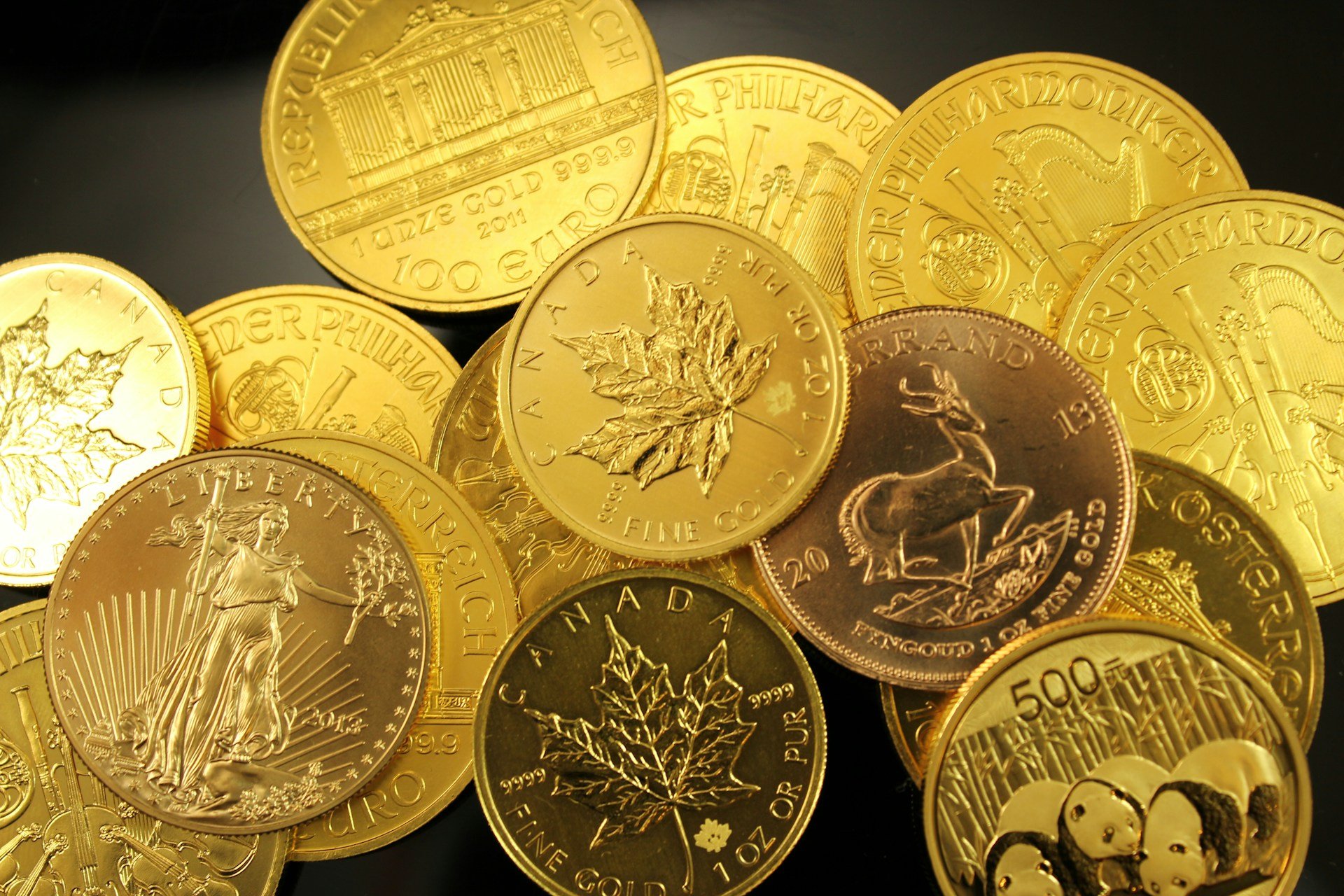
Take the largest gold ETF, SPDR Gold Shares (GLD), as an example. It's structured as a trust holding physical gold bars, stored in vaults in London, meeting the standards set by the London Bullion Market Association, and subject to regular third-party audits. The trust holds only "fully allocated" gold — meaning the bullion in its vaults precisely matches the shares outstanding at the close of each business day. Authorized Participants can exchange gold for shares, or shares for gold, and this mechanism is what keeps GLD's market price closely tied to gold's actual value. Retail investors won't typically go through this redemption process themselves — it operates in blocks of 100,000 shares — but the path existing at all is the proof that real gold sits behind it.
Tokenized gold applies a similar logic using blockchain. The two largest tokens — PAXG (Pax Gold) and XAUT (Tether Gold) — each claim that one token corresponds to one troy ounce of physical gold. PAXG's gold is stored in London vaults, issued by Paxos under New York state financial regulation, with monthly audit reports. XAUT's gold is stored in Swiss vaults, issued by a Tether affiliate, with quarterly audits. Both let holders look up the serial number of the specific bar backing their tokens, and both preserve a path to redeem tokens for physical bars — though the bar is similarly high, typically requiring enough tokens to claim a full London Good Delivery bar (around 430 tokens).
Whether wrapped as a stock or as a token, the underlying logic is the same: what matters is whether real gold is being stored, audited, and (at least in theory) redeemable — not the packaging.
Central Bank Buying Quietly Backs Up the Theory
If gold's real value really were being suppressed by paper markets, you'd expect to see large institutions stepping up purchases of physical gold. That's exactly what's been happening. China bought 163 tons of gold in May, the most in a single month since March 2024. Zooming out, global central banks bought 1,237 tons of gold in 2025 alone — the third consecutive year above the 1,000-ton mark. These are publicly verifiable figures, and they tell a consistent story: even as paper trading gets squeezed, real gold is being bought and stored at scale.
Volatility Is Exactly Why Timing Isn't the Answer
From January's all-time high of $5,597 to just over $4,000 today, gold has moved through a dramatic swing of nearly 30% in a matter of months — and that's just the first half of this year. Central bank policy, geopolitics, and currency confidence are all tangled together behind the moves, and no one can reliably predict what happens next.
That kind of uncertainty is exactly the case for a disciplined approach like dollar cost averaging. Instead of guessing whether now is a low point or whether central banks will keep buying, breaking purchases into a fixed, regular rhythm means you don't have to be right about timing to participate in an asset class's long-term value. No one can guarantee gold keeps rising — but replacing guesswork with discipline at least keeps you from being shaken by short-term swings you can't predict.
Gold price and central bank purchase figures compiled from public market reporting, including World Gold Council data.