
The Thrill of Buying May Start Before You Own Anything
Sometimes you don't really need anything, yet you still find yourself opening a shopping app. You spot something you like and start picturing life after you buy it. A limited-time deal pops up, and passing on it suddenly feels like a waste. Then you hit checkout, and your mood seems to lift with it.

The funny thing is, that excitement rarely lasts. Once the package arrives and you open it, the anticipation fades fast, and before long you're hunting for the next thing that catches your eye. Often what pulls you in isn't the product itself but the idea of how good things will be once you have it. The chemical most often mentioned behind this is dopamine.
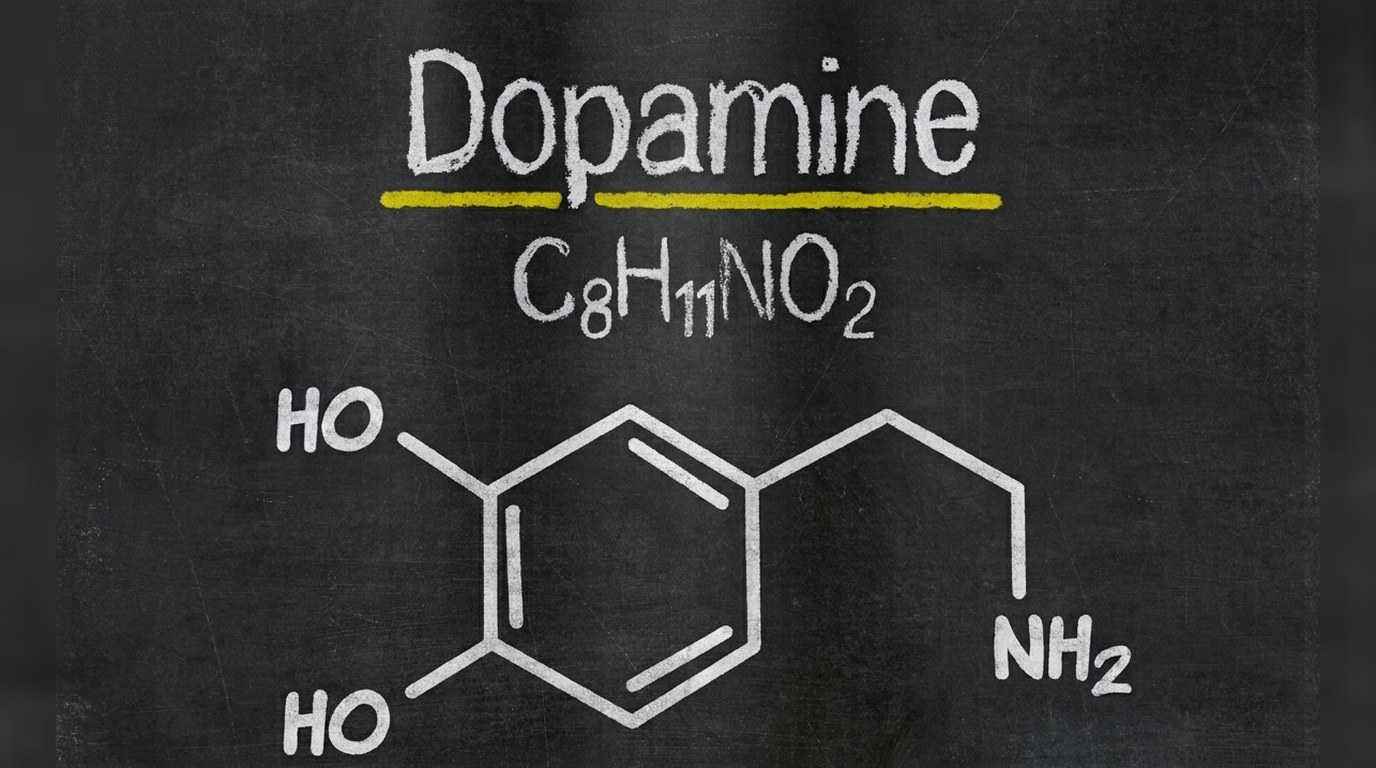
Dopamine is often called the "feel-good chemical," but it does more than make you feel pleasure. It's also involved in motivation, in anticipating rewards and in driving you to act. In other words, your brain can be pushed forward by the expectation of a possible reward before you ever actually receive one.
Neuroscientists Kent Berridge and Terry Robinson of the University of Michigan proposed that "wanting" and "liking" a reward are not the same process. That helps explain why you can crave something intensely, then feel less satisfied than you expected once it's yours. And when that habit of chasing anticipation moves from your shopping cart into your brokerage account, it deserves a closer look.
When the Reward You're Chasing Becomes a Gain in Your Account
Imagine you've never paid much attention to a particular stock, then one day you see it surge. Soon people are posting screenshots of their gains, the news picks it up, and a friend mentions they bought in long ago. You were just looking at first. Then you start reading up, watching the chart, even imagining: if I bought now, could I make some money too?

At that point, hitting "buy" may no longer be just a reasoned decision. It also carries the anticipation of future profit. A shopper imagines the satisfaction of owning the product; an investor imagines the payoff after buying. The two aren't identical, since investing also involves an asset's value and its risk, but psychologically both can be drawn in by the feeling that a reward is just ahead.
This is especially true once the price starts climbing and a profit becomes easier to picture. You may not have made a cent yet, but you're already thinking about how much more you'd have if you'd bought earlier. There's nothing wrong with that kind of anticipation; investing is about seeking future returns. The real question is whether, as the anticipation grows, you can still see the price and the risk in front of you clearly. If your reason for buying slowly shifts from "this asset is worth owning" to "I don't want to miss it going higher," a quiet psychological change may already be under way.
From Wanting to Profit to Fearing You'll Miss Out
At first, you might simply like an asset and hope to profit from it. But as the market keeps rising and the people around you keep making money, that hope can turn into a different emotion: "If I don't buy now, will I ever get this price again?"
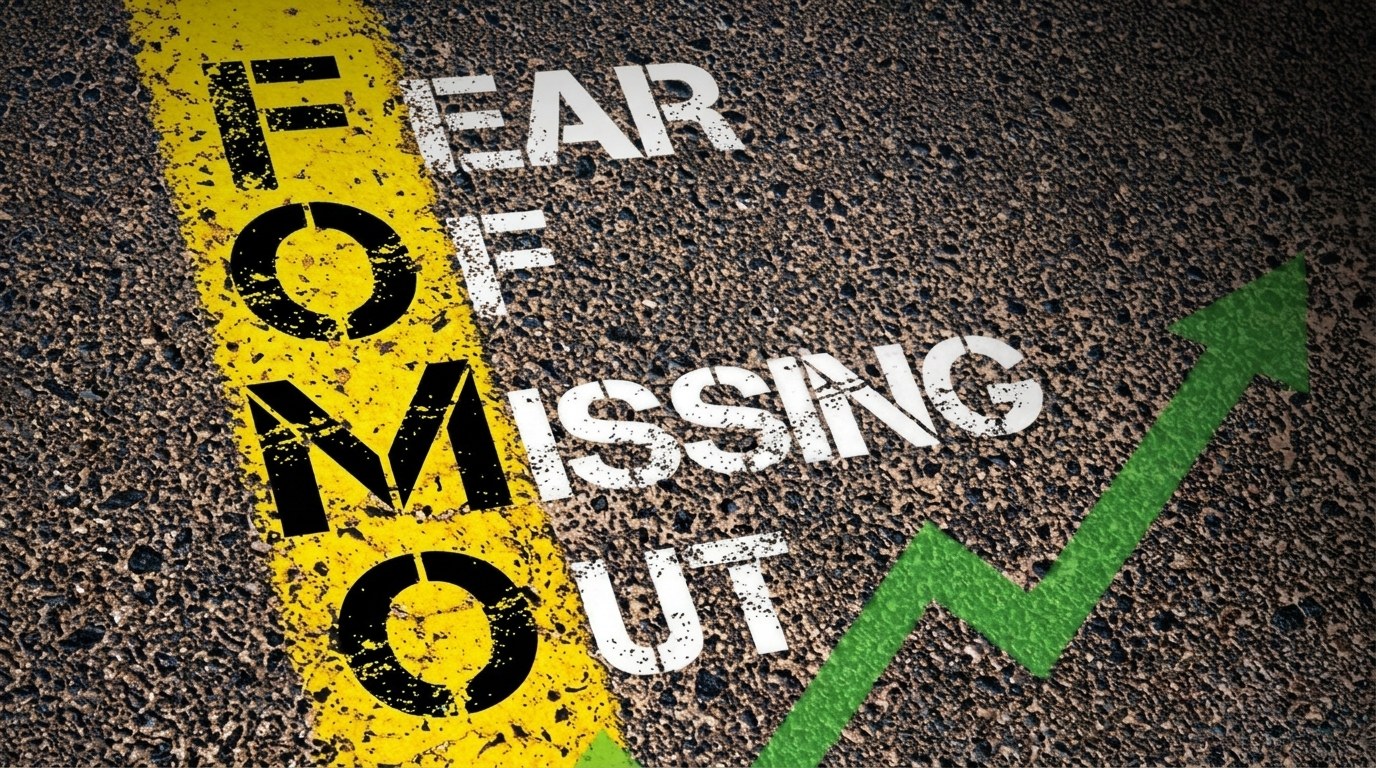
That's FOMO, the fear of missing out. The reward anticipation tied to dopamine makes you want to chase a possible gain; FOMO layers on the fear of missing it, comparison with others and the regret you imagine feeling in advance. You start out thinking about how much you could earn, and end up fixated on whether you've missed what everyone else is getting.
That's why so many people know chasing a rally is risky and still can't resist. When a stock rises from $100 to $120, you may feel there's still room to run. At $140, with others showing off their gains, you start worrying that it's now or never. A price you once thought was too high suddenly seems acceptable, and the entry rules you set keep getting rewritten as the rally continues. At that point you're not just buying to make money; you're buying to make the "I might have missed it" feeling go away. Your decision has quietly shifted from judging an opportunity to avoiding regret. (If you tend to wait for a trend to confirm before buying, this is where it gets hardest. See this comparison of bottom-fishers and trend-followers.)
FOMO Isn't Just a Feeling. It Can Keep You Chasing
In 2024, a team of researchers led by Felix Friederich published a paper in the journal Psychology & Marketing that used five studies, including eight experiments, to examine how FOMO shapes people's decisions to invest in cryptocurrency. They found that FOMO messages from the outside world increase people's willingness to invest by working through their emotions, and that how impulsive a person is changes how strongly those messages land. Most striking, people exposed to FOMO messages were willing to invest again even after they had already lost money.
The research focused on crypto, and Bitcoin is a textbook example. In November 2021, Bitcoin hit a record high near $70,000. Social media was full of profit screenshots, and even people who never invested were talking about getting on board. A year later, in November 2022, it was trading around $16,800, roughly 77% below its peak. Anyone swept in at the most exciting moment faced a long, painful stretch afterward.
That doesn't mean every chase is caused by dopamine. It means that when the hope of profit, the fear of missing out and emotional triggers all show up at once, it can become much harder to stick to your original judgment.
And the anticipation doesn't necessarily end once you buy. When the price rises, the paper gain feels good and you start hoping for more. When it falls, you worry you made a mistake and keep checking quotes and hunting for news. Then another asset suddenly takes off, your attention jumps, and you wonder whether you should switch. Investing can slowly turn from pursuing long-term returns into an endless chase for the next opportunity. The market always has a new hot stock and a new story, and someone is always sharing an incredible gain. When all you see is other people making money, it's easy to fall for an illusion: everyone else seized the moment, and you're the only one left standing outside.
Instead of Telling Yourself Not to FOMO, Get to Know Yourself
Dopamine and reward anticipation are normal parts of human psychology. A simple "don't chase" won't make them disappear. A more practical approach is to figure out when you're most likely to be swayed.
Some people can't resist buying the moment a price jumps. Some are especially triggered by friends or social media posts about big gains. Others have a plan but keep changing course whenever the market latches onto a new theme. Different reactions call for different fixes. If you tend to buy impulsively when things are hot, give yourself a waiting period and don't make big decisions at the peak of excitement. If social media gets to you, spend less time in trending investment discussions. If market swings keep changing your plan, write down your investment criteria, amounts and adjustment rules while you're calm.
The goal isn't to have no emotions at all. It's to know what to do when they show up. MoneySense, the Singapore government's financial education website, offers some very concrete steps in its guide to behavioral science and investing: write down an investment plan, automate your investing, check your portfolio less often, and deliberately pause before major decisions, for instance by giving yourself a 48-hour waiting period. What these ideas share is that they move important decisions to calmer moments, instead of leaving them for when the market is at its loudest, most exciting or most frightening.

Let Your Plan Decide Before Your Emotions Do
Dollar-cost averaging (DCA) is one approach worth considering. You set the amount and timing in advance and buy on a fixed schedule, rather than deciding all over again whether to get in every time the market moves.
It can't guarantee you'll buy at the bottom, and not every asset suits regular investing. But for anyone easily pulled around by short-term moves, it can reduce the tug-of-war you feel every time you buy. When the market rises, you don't have to pile in out of fear of missing out. When it falls, you don't have to abandon your plan out of fear. You still need to review your holdings and risk regularly; you just don't have to turn every market swing into a fresh emotional test. (For how DCA stacks up against trying to buy the dip, see this comparison.)
Of course, DCA isn't the only answer. Some people do well researching and making their own calls; others are better off investing on a schedule and cutting down on spur-of-the-moment decisions. Some need a waiting period; others need less information coming at them. What matters is finding an approach that fits your personality, your risk tolerance and the rhythm of your life. Investing discipline isn't copying someone else. It's knowing where you're most likely to lose your judgment, and planning your response ahead of time.
You Don't Have to Kill the Anticipation. Just Know What You're Chasing
Dopamine makes rewards attractive, and FOMO can turn that anticipation into a fear of missing out. When markets are rising and others are making money, "I'd like to profit" can easily become "I have to get in right now." Understanding that process isn't about rejecting the hope that comes with investing, or expecting anyone to become emotionless. It's about giving yourself a chance to recognize what you're going through in the moment the urge hits.
There will always be another hot asset and another opportunity that looks too good to miss. Real investing discipline isn't catching every move. It's knowing, when hope and fear show up, why you're buying, what you plan to do and when you don't need to dance to the market's tune.
You don't need to beat your emotions every time, but don't let them make every decision for you.
The distinction between "wanting" and "liking" comes from the work of neuroscientists Kent Berridge and Terry Robinson. The FOMO and crypto research is "CRYPTO-MANIA" by Friederich et al., published in Psychology & Marketing in 2024. The investing practices are drawn from Singapore MoneySense's "Behavioural science and investing." Bitcoin prices come from public market data. This article is educational and does not constitute investment advice.