
A 1949 Book, Pulled Back Off the Shelf in 2026
In 2026 — a year when the AI boom is burning so much cash that its giants have marched into the bond market to borrow — a book first published in 1949 keeps getting pulled back off the shelf: Benjamin Graham's *The Intelligent Investor*. Warren Buffett has called it "by far the best book about investing ever written." The latest edition is the 75th-anniversary release, updated with Jason Zweig's commentary in 2024. Seventy-odd years on, through market regime after market regime, its principles haven't aged — and 2026 has just proven them again. What follows pulls out the book's most important ideas and sets them against what the US market actually looks like right now. The point isn't which stock to pick; it's getting your mindset and discipline in place first.
There's a Clear Line Between Investing and Speculating
Graham's definition of investing is uncompromising: "An investment operation is one which, upon thorough analysis, promises safety of principal and an adequate return. Operations not meeting these requirements are speculative." The 2025–2026 AI rally is the perfect control group. Among NVIDIA, Microsoft, Alphabet, OpenAI, and Oracle, money has started moving in circles — the giants invest in one another, buy from one another, and prop up one another's revenue and valuations. To build data centers they've begun borrowing heavily: the five biggest cloud players issued about $121 billion in corporate bonds in 2025 alone, roughly four times their earlier annual average, and by the end of 2025 AI-linked debt had swelled to around $1.2 trillion — the single largest slice of the investment-grade bond market. Tesla's P/E has sat near 300x for ages while its earnings and margins stay razor-thin, and money still pours in. What's more telling: the entire AI industry brought in only about $60 billion of revenue in 2025 against roughly $400 billion of capital spending — a gulf between input and output that hasn't been bridged. When price and fundamentals gap this wide, held up mainly by story and momentum, it's not so different from every bubble before it. Graham would ask you three things: how much free cash flow can this business actually produce? At today's price, is the expected return reasonable? Is the margin of safety enough? Buy on heat and mood alone, and you're closer to speculating.

Mr. Market Knocks Every Day — You Don't Have to Answer
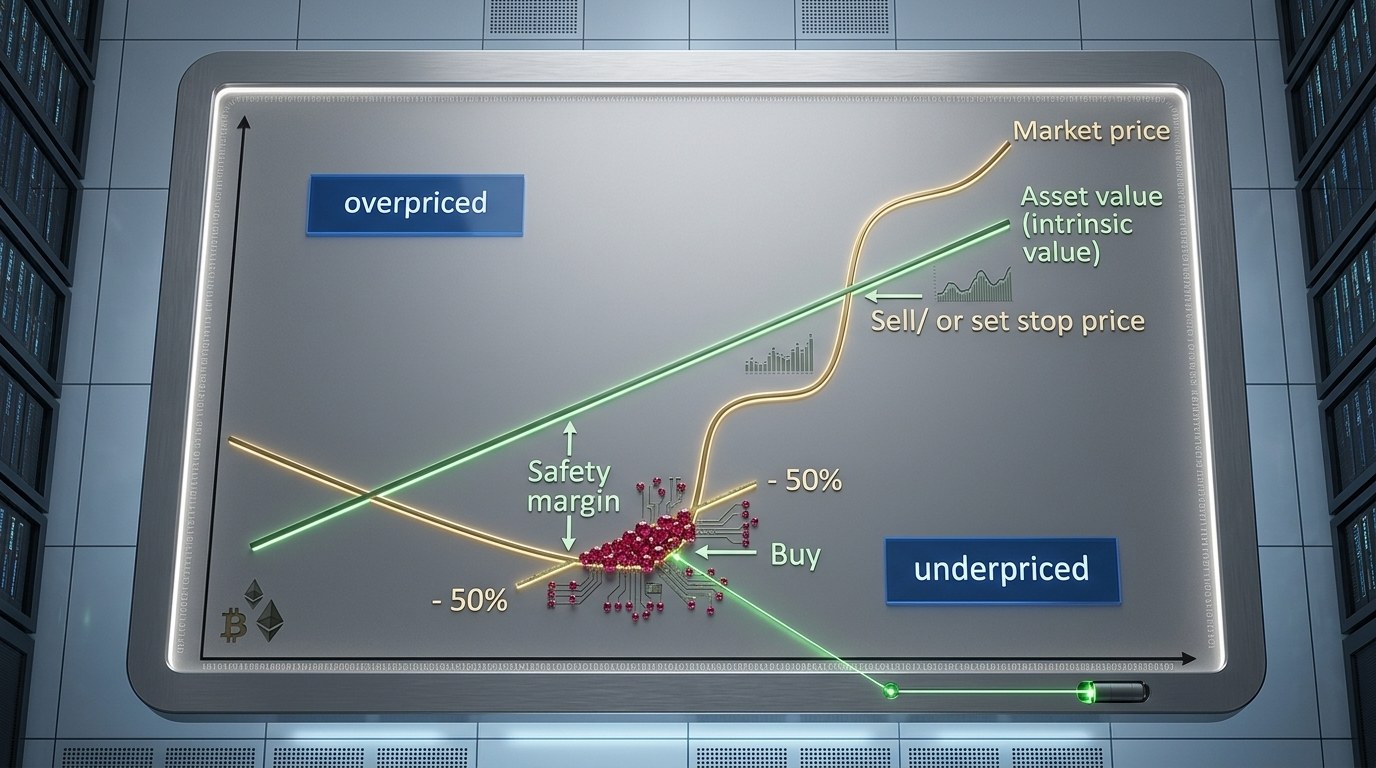
Graham invented a classic character: Mr. Market. Every day he shows up and quotes you a price to buy or sell. Some days he's euphoric and the price is absurd; other days he despairs and nearly gives it away. The point was never to guess his mood — it's to use it. Graham put it bluntly: you are neither right nor wrong because the crowd disagrees with you; you are right because your data and reasoning are right. He put it even better still: in the short run the market is a voting machine, driven by emotion; in the long run it's a weighing machine, and only then does value get measured. In 2026 Mr. Market is running hot: despite on-again-off-again tariffs, rising bond yields, and geopolitical uncertainty, the S&P 500 keeps setting records; the options market is broadly bullish, retail participation through online platforms has climbed, and social media spreads both information and emotion faster than ever. As the book argues, when Mr. Market's quotes run high and sentiment overheats, you can buy less, even trim; when he turns fearful and prices sag, that's the better time to add to quality holdings. Prices get pushed around by emotion in the short run, but they return to value in the long run.
Margin of Safety: The Book's Core — and Most Practical — Idea
Buffett has said the two most important chapters in the whole book are Chapter 8, on Mr. Market, and Chapter 20, on the margin of safety. And on that margin, Graham said it over and over: "The margin of safety is always dependent on the price paid." Even a great company raises your risk if you overpay. The margin of safety is the buffer between the price you pay and intrinsic value — there to absorb your analytical errors and the shocks you can't see coming. As of mid-2026, several independent valuation models show some large tech names trading well above their estimated intrinsic value; for the market as a whole, and growth stocks in particular, that buffer is thin. When valuations already price in the rosiest scenario, any execution stumble or shift in rates can bring outsized swings. The steady approach the book prescribes: favor reasonably priced, financially sound businesses with a long record of profitability — or simply build your allocation with low-cost index tools. Holding a margin of safety mostly does one thing: it lowers the odds of permanent loss.
"The margin of safety is always dependent on the price paid."
Are You a Defensive or an Enterprising Investor?
Graham split investors into two kinds. The defensive investor has limited time and energy and aims for safety of principal plus a reasonable return — he advised keeping stocks and bonds roughly balanced, with one very concrete rule: never less than 25% nor more than 75% in stocks, the rest in bonds, rebalanced periodically, with the stock side in large, high-quality companies or an index. Rebalancing itself is a disciplined form of buying low and selling high — when stocks run up and overshoot your target weight, you automatically trim and top up bonds; when they fall and the weight shrinks, you automatically buy back. You don't forecast; the rule executes for you. The enterprising investor is willing to put in serious work for excess returns — but only with a clear, strict set of selection criteria. The 2025–2026 SPIVA and Morningstar data again show that over the long run most actively managed funds struggle to keep beating their benchmark, with fees a key reason. For the defensive investor, a low-cost ETF tracking the S&P 500 or the total US market (such as VOO or VTI) is a genuinely practical choice.
Turning Discipline Into a Habit: Dollar-Cost Averaging
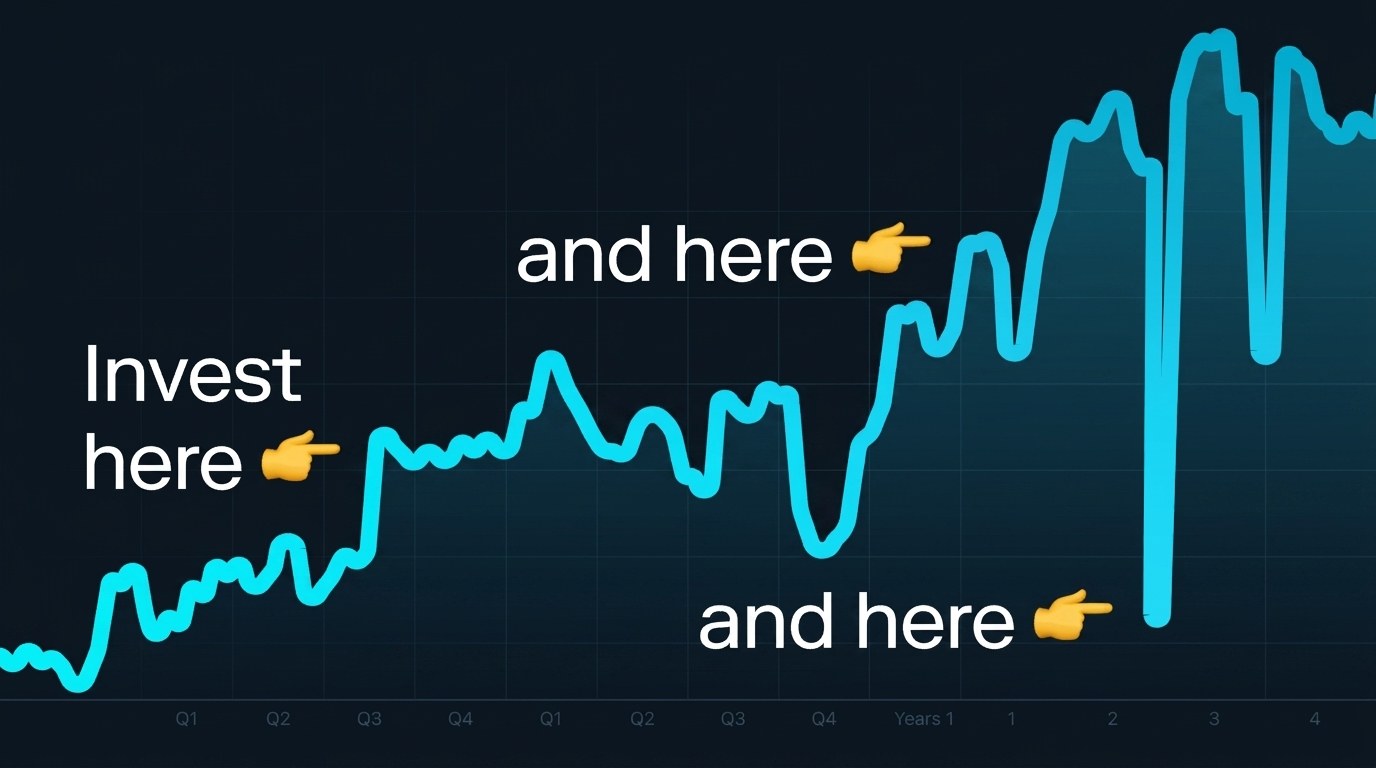
Graham wrote about "formula investing," and its spirit lines up closely with what we now call dollar-cost averaging (DCA): at fixed intervals, invest a fixed amount, whatever the price, into your chosen assets. The benefits are concrete — it removes the pressure to time the market, keeps you from betting everything at the top, and forces you to keep accumulating when the market is grim. Over time your average cost is smoother and emotion interferes far less. Against a 2026 backdrop of stretched valuations, circular AI financing, and policy uncertainty, DCA is especially worth heeding: a single large lump-sum entry carries higher risk, while spreading your entry points deploys capital in tranches and simply feels safer. Whether you choose individual quality companies or a low-cost index ETF, pairing it with a sensible slice of bonds or cash and rebalancing once a year makes the discipline far easier to keep. The book adds a few equally important reminders: diversify properly, never staking everything on one stock or one theme; manage your emotions, remembering the market is a voting machine short-term and a weighing machine long-term, and keep your attention on fundamentals; and don't chase unrealistic returns, which only piles on unnecessary risk.
It's Still Standing After Every Bubble
These principles aren't armchair theory. The 1999 dot-com bubble, the 2008 financial crisis, the 2020 crash and violent rebound — in every one, the people who held a margin of safety, entered in tranches, and refused to be led around by Mr. Market came through steadier than those who chased the top. That's why, seventy-odd years on, whenever the market starts to lose its head, this book gets pulled back off the shelf. It won't hand you the next moonshot, but it will help you dodge the mistakes that knock you out of the game.
In Closing: "Intelligent" Was Never About IQ
Graham was clear that the "intelligent investor" was never about a high IQ — it's about patience, discipline, continuous learning, and the ability to manage your own emotions. Those traits are worth more than any piece of short-term news. The principles in *The Intelligent Investor* have been tested across decades and countless bubbles, and they still hold. The core comes down to a few things: build a margin of safety, separate investing from speculating, use Mr. Market's moods instead of following them, and pick a strategy that fits who you are. Over a long enough horizon, steady execution beats chasing the hot thing — and quietly compounds.
The ideas here summarize Benjamin Graham's The Intelligent Investor (first published 1949; 75th-anniversary edition with Jason Zweig's commentary, 2024); market figures are drawn from public reporting as of August 2026. This article is educational and does not constitute investment advice.