Worth Hundreds of Billions, Still Driving Himself to McDonald's
Warren Buffett is worth well over a hundred billion dollars, yet still lives in the same modest house he bought in 1958 for a little over thirty thousand, drives an ordinary car, and has breakfast at McDonald's. It isn't that he can't afford better. He decided long ago what's worth spending on and what isn't — he's even said the money he sank into that house would have earned him more had he put it into stocks instead.
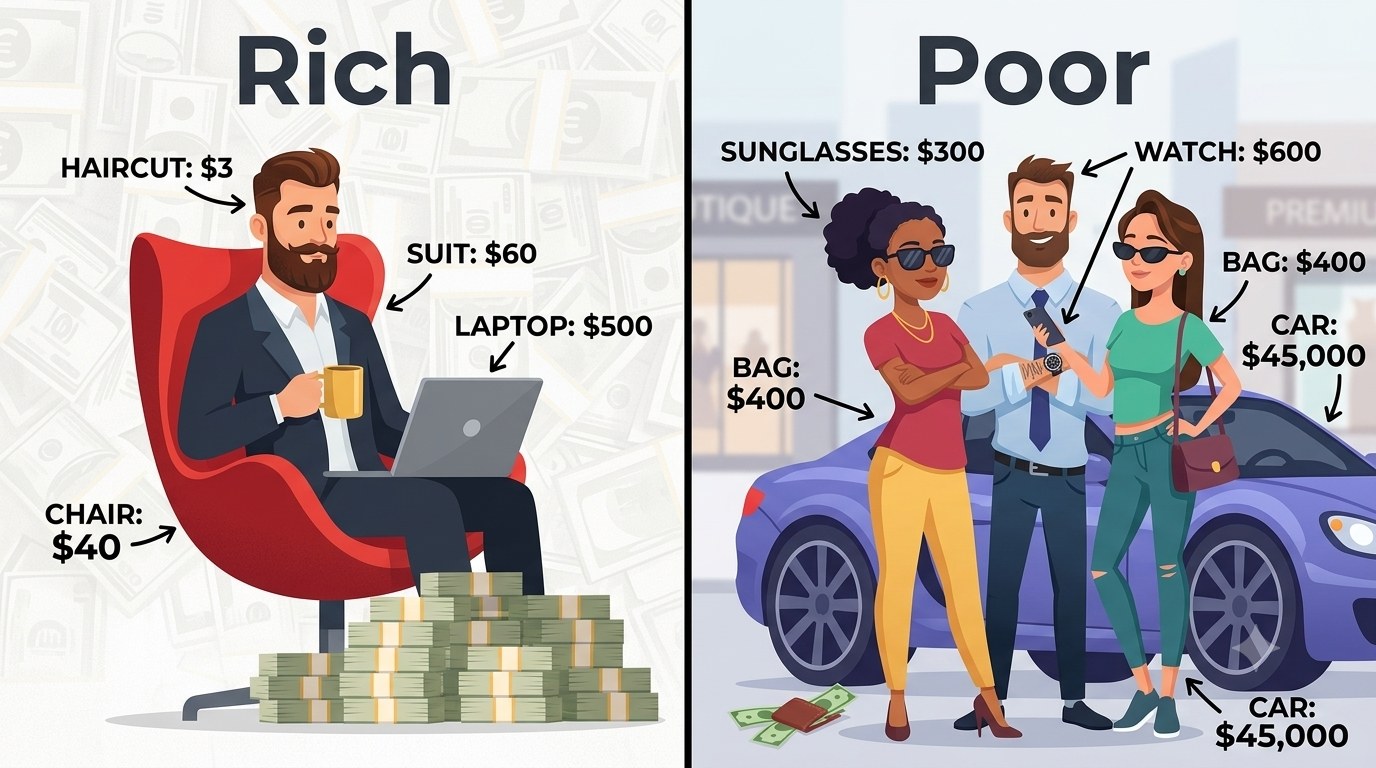
And it isn't just his quirk. Take Mark Cuban — worth billions, the Shark Tank investor — who shows up to meetings in a plain t-shirt and jeans; or Christian Bale, an Oscar-winning actor who drives a two-decade-old Toyota. None of them lack the money to indulge — they just spend it where others can't see, on the things that actually matter.
Most people assume the wealthy start being careful *after* they get rich. The order is reversed: it isn't that being rich makes them spend this way, it's that spending this way is what slowly makes them rich. So instead of listening to a wealthy person tell you to "save," it's worth seeing clearly where their money actually goes — and which traps they sidestep.
And if you're broke by the end of every month, wanting to invest but never able to free up the cash, here's a line that may not land softly: the problem usually isn't that you earn too little.
It isn't that being rich makes them spend this way — it's that spending this way slowly makes them rich.
"Spend Less" Is the Most Useless Advice on Earth
Telling someone who's always broke to "cut back, stop wasting money" does almost nothing. The advice isn't concrete, so they have no idea where to start, and end up at "I just can't save." The real questions are far more specific: where is the money leaking out, and where should what you save go? Someone once catalogued eight things the wealthy refuse to waste money on — sorted into three kinds of leak, the money's path turns out to be traceable.

Leak One: Spending to "Look Successful" (Often the Costliest)
What this group has in common is that the spending is for other people to see. Designer labels bought to prove you've made it — yet in a room full of genuinely wealthy people, the richest one is often in a plain t-shirt. A new car that loses about 20% of its value in its first year, the moment it leaves the lot. The endless upgrades to the newest phone, watch, laptop, just to keep up. And a house bigger than you need — the bigger it is, the more it quietly eats, roughly 3–4% of its price every year in carrying costs. These tend to be large, and the easiest to justify with "I deserve it" — and one of them cancels out half a year of small savings.
Leak Two: The Drip Too Small to Notice
This group is the sneakiest, because no single one stings. A daily coffee plus a delivery order, call it $8, is nearly $3,000 a year; frequent small weekend outings quietly run into the hundreds each time.
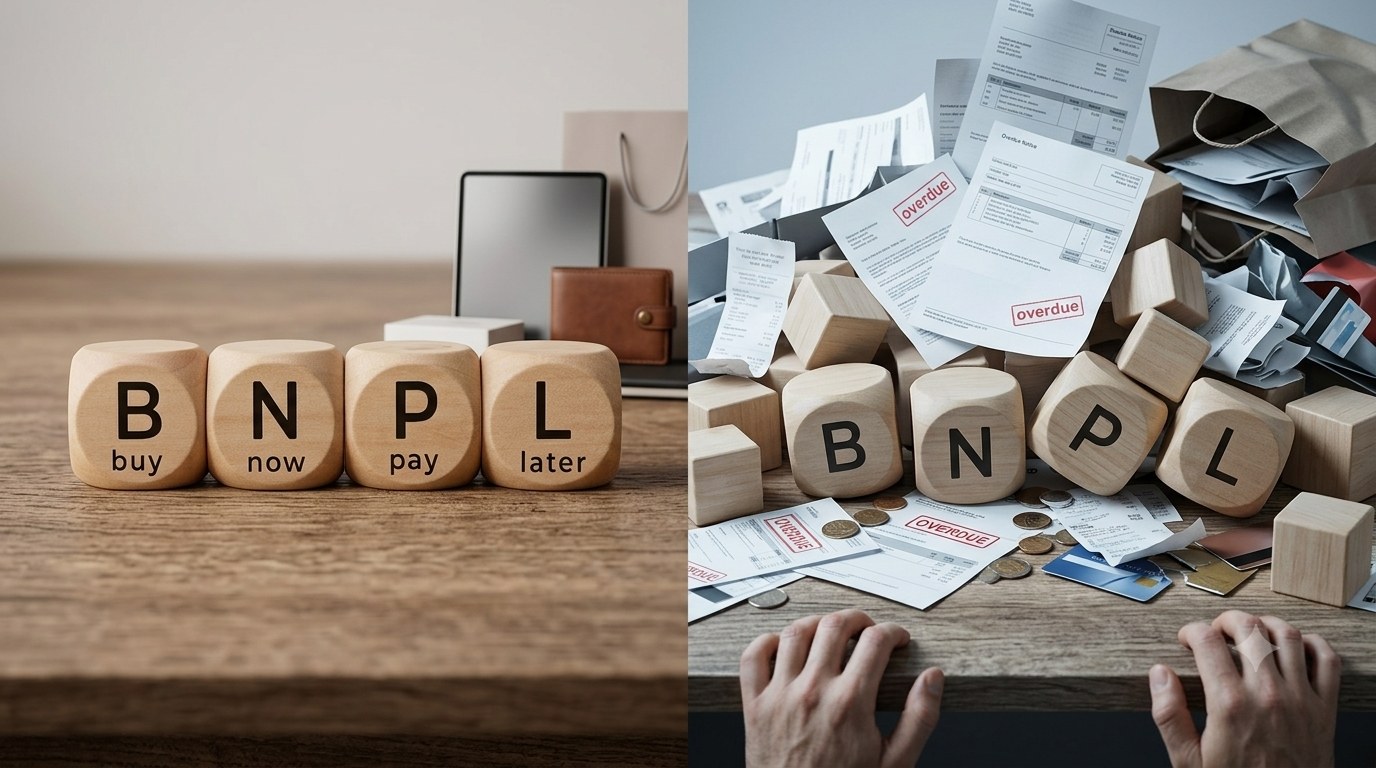
And the craftiest of all is paying in installments — "buy now, pay later." It splits one cost into "just a little each time," diluting the sting of paying. This isn't your imagination: one study using real transaction data from a large U.S. retailer found people who started paying in installments spent about 10% more per purchase and were more likely to buy at all — the effect strongest on those who normally bought only small things. Its purpose was never to make things affordable; it was to make spending feel painless.
Leak Three: Trying to Get Rich Fast — and Getting Fleeced
Then there's the most ironic one: chasing quick wealth through crash courses, hot tips, and shady "systems." The very urgency to turn things around is exactly what gets targeted. Real wealth has no shortcut; the more you rush, the easier it is to hand the money that could have compounded for you straight into someone else's pocket.
How to Make the Leaks Visible (What to Actually Do)
The point isn't to quit every pleasure — it's to turn the invisible visible. Add up your real monthly total for eating out and delivery, once (most people startle themselves). Pay for small purchases in full, even in cash, so each one stings a little. Set yourself a hard weekly cap. You don't have to become a monk; you just have to know each time a dollar leaves.
The Half Most People Skip: You Saved It — Now What?
Saving is only step one. The real gate is next: money you save, if it just sits in your account, gets claimed by the next impulse. It needs a fixed exit.
What the wealthy do is flip the order — on payday, move a fixed share out and invest it first, and live on what's left. Not "save whatever remains at month's end," but "save first, then spend."
A practical way to start: instead of agonizing over "how much can I save a month," fix a *percentage* — even 5% or 10% of your pay to begin — and automate the transfer. A percentage beats a fixed amount because it grows with your income and spares you the monthly decision. Fixed, small, continuous investments into a broad market index, and hand the rest to time — that's what connects *where you save* to *where it goes*.

The Payoff: Time Turns Small Money Into a Startling Number
This is where it gets its power. Someone ran the numbers, deliberately using only those "small" leaks — the newest gadgets, the weekends out, the daily coffee and delivery — which add up to about $6,000 a year. Put that $6,000 into a broad S&P index fund at the roughly 7% the market has long been cited as averaging, for 40 years (about one working career, first job to retirement), and it grows into more than $1.1 million.
And that's just three habits. Dodge all eight traps and invest what you free up, and the figure climbs past $6 million. Notice the key was never "how good you are at picking stocks." It's whether that fixed sum actually kept going in, and whether it got long enough to work. The heavy lifting is done by time, not by you.
Being Broke Isn't Because You Earn Too Little
The real reason people stay broke is rarely low income — it's that every dollar has no assigned destination, so all of it gets claimed by the impulse of the moment. What the wealthy do is, at bottom, simple: they gave every dollar a job long ago — which traps to sidestep, and where the rest goes to compound.
And this has almost nothing to do with the size of your paycheck. You don't have to get rich before you're allowed to start. Closer to the truth: spending this way first is what slowly made them rich.
The details on Buffett's home, car depreciation, and buy-now-pay-later here are drawn from public reporting and academic research (CNBC; Kelley Blue Book; Journal of Marketing, 2025); some points are drawn from a finance YouTuber's publicly posted video. This article is educational and does not constitute investment advice.