
Same Goal, Opposite Instincts: Why Some Buy the Drop and Others Wait
Picture a stock that slides from $100 to $70. One investor sees a 30% discount and feels the opportunity: "It was too expensive before. Now it's finally cheap. If nothing's wrong with the company, why wait until it's back at $100?" Another investor looks at the very same chart and thinks: "Why did it fall this far? Is there a problem nobody has found yet? Better to wait."
From here, the story can go two ways. In the first, the buyer watches the stock keep sinking instead of bouncing back. Doubt creeps in, and he can't stop opening his trading app, wondering when the slide will finally end. In the second, the stock starts to recover. The one who waited watches the price climb day after day, grows more anxious, regrets not buying, and finally gives in, just in time for a pullback.
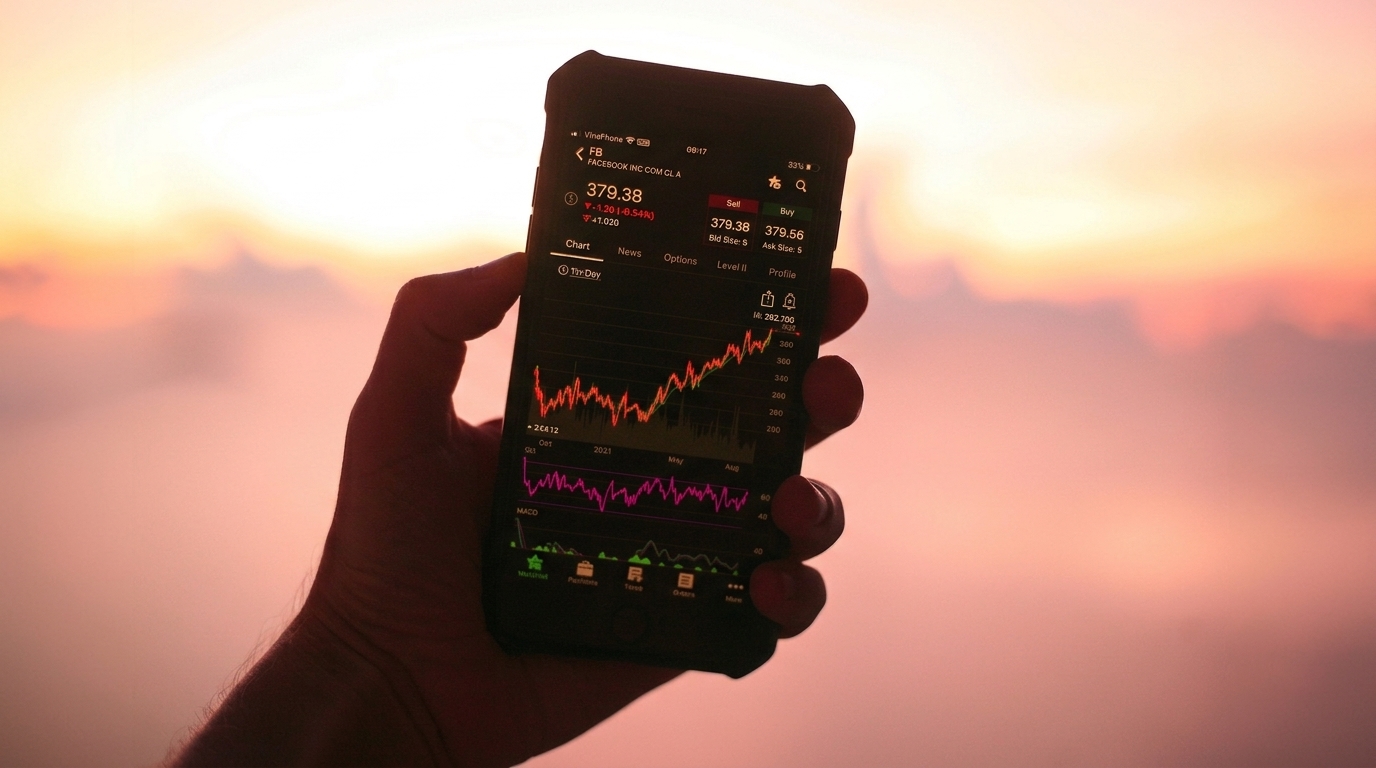
Sound familiar? The first investor is closer to a left-side trader: someone who wants to buy cheap before the market turns. The second is closer to a right-side trader: someone who waits for the trend to become clear before stepping in. The names come from the price chart itself. Left of the lowest point, prices are still falling; right of it, they're already recovering.
Both approaches make sense, and both come with their own kind of pressure. Bottom-fishers worry about buying too early. Trend-followers worry about missing the move. Since neither method guarantees success, the more useful question isn't which camp is better. It's which one fits your temperament.
The Left Side: While Everyone Ran, Buffett Started Buying
Imagine it's the fall of 2008 and someone tells you to take your cash and buy stocks. Your first response would probably be: "Are you sure?" The U.S. was in the grip of the financial crisis. Lehman Brothers had collapsed, one financial institution after another was in trouble, stocks were plunging, and a recession was closing in. Investors weren't just worried about further losses; they didn't know who would fail next. Every time prices looked low enough, they went lower. Even people eager to buy the dip had to wonder: what if this time really is different?
That was the mood when Warren Buffett published an op-ed in The New York Times in mid-October 2008 titled "Buy American. I Am." He announced that he was buying U.S. stocks and revealed that his personal account had held nothing but U.S. government bonds. If prices stayed attractive, he wrote, his net worth outside Berkshire would soon be 100% in U.S. equities.
Buffett didn't claim the crisis was over, and he didn't pretend to know when the market would bottom. He acknowledged that in the near term unemployment would rise, businesses would keep struggling and the headlines would stay frightening. But to him, the market's fear of the moment didn't erase the long-term prospects of good businesses. In the same piece, he restated the buying rule that has been quoted ever since:
Be fearful when others are greedy, and be greedy when others are fearful.
That is the heart of left-side thinking: you don't have to wait for things to improve before buying. Instead, you try to judge whether the price already reflects more bad news than it should.
Still, the market didn't bounce once Buffett started buying. The S&P 500 kept falling for almost five more months and didn't bottom until March 9, 2009. In other words, even investors who agreed with him faced months of paper losses. When prices drop, it's easy to tell yourself you're in it for the long run. When the drop keeps going, that confidence can start to crack. Your reasons for buying haven't changed, yet the losses keep growing. Do you hold on, or admit you were wrong? That uncertainty is often harder to bear than the loss itself.
Of course, Buffett's value investing isn't the same thing as every left-side trade. He doesn't buy simply because a stock fell; he weighs what a business is worth against the price he pays. His experience shows that left-side investing takes more than the nerve to buy when others panic. It also takes the stamina to be out of step with the market for a while. Buying only because a price fell, without any sense of a company's value or a fair price, is often just catching a falling knife. Even when the opportunity is real, you need to know you can survive the wait.
The Right Side: Druckenmiller Read the AI Trend, Then Missed the Final Leg
If Buffett's story is about finding value in the middle of a panic, hedge fund legend Stanley Druckenmiller's Nvidia trade shows a different mindset: confirm the trend step by step as new information arrives, and adjust along the way. In late 2022, artificial intelligence was nowhere near the household topic it would become. Nvidia was already a major chipmaker, but many people still thought of it mainly as the company behind gaming graphics cards and PC hardware.
Druckenmiller wanted exposure to AI and asked his team what to buy. A young partner with deep Silicon Valley connections pointed him to Nvidia. He bought an initial stake in November 2022, roughly two weeks before ChatGPT launched. Once ChatGPT made generative AI a mainstream conversation almost overnight, he grew more confident in the trend and doubled his position. What he saw may have been more than a clever new app: it was AI's long-term impact on chips, data centers and the entire tech industry.

What stands out is that he didn't need to understand everything at the start. He took a position based on what he knew, then adjusted as new evidence came in. That is the lesson right-side thinking offers: you don't have to beat everyone to the bottom. You can wait for the trend to become clear before deciding to take part. And right-side trading isn't only about chasing rallies. The same approach can help you spot a downtrend, wait for signs of a reversal, or adjust holdings as the market changes.
But even seasoned investors have their own psychological hurdles. When Druckenmiller bought, Nvidia traded around $150 (before its stock split). By early 2024 it had passed $800. In late March 2024 he sold much of his stake, and Nvidia kept climbing after he got out. Looking back, he admitted he "couldn't stand success": he had meant to hold for the long term, yet he sold anyway.
That outcome is worth thinking about. When a stock has soared and paper gains pile up fast, selling locks in the profit and brings relief. But if the stock keeps rising after you sell, the regret of getting out too early stings just as much. The next time a similar rally comes along, you might even hold on too long simply to avoid repeating the mistake.
It also shows that right-side trading isn't about buying whatever is going up. It's about acting on the trend and the evidence as it emerges. You still have to decide when to get in and when to get out, and you have to accept that you'll miss part of the move. For some people, the hardest thing is watching a stock fall after they buy. For others, it's being right about the direction and still missing the biggest part of the gain.
The Real Difference: One Fears Buying Too Early, the Other Fears Missing Out
Put the two approaches side by side and the difference isn't just timing. It's the kind of psychological pressure each one asks you to carry. Left-side investors want to buy cheap rather than wait until everyone is optimistic. But when prices keep falling and there's no sign of recovery, they have to sit with paper losses and decide whether they've found an opportunity or underestimated the risk. Right-side investors are willing to wait for a clear trend or reversal signal. That may spare them part of a decline that isn't over yet, but it can also mean missing the early gains. And when prices keep rising while they're still on the sidelines, the fear of missing out can break their discipline just as easily.
Here's an example. A stock starts falling from $100. A left-side investor might begin buying at $70. A right-side investor plans to wait until the slide stops and the price recovers to around $80 before stepping in. If the stock never stabilizes and drops all the way to $40, the left-side investor starts doubting the decision, while the right-side investor is relieved not to have bought. But if the stock bottoms at $60 and then climbs to $120, the left-side investor is well ahead, and the right-side investor, though still profitable, may wish they had moved sooner. The market doesn't care which camp you picked.
And both approaches can go wrong. Left-side investors can mistake "cheap" for "undervalued." Right-side investors can mistake a short-lived bounce for a genuine reversal. Buying early doesn't guarantee buying well, and waiting for confirmation doesn't guarantee avoiding losses. The real difference is that each approach asks you to bear a different kind of risk and face a different emotional test.
Don't Rush to Be the Next Buffett. Find a Method You Can Stick With
It's easy to envy successful investors. Watch Buffett buy during a panic and you may feel you should learn to think like a contrarian. Watch Druckenmiller ride the AI wave and you may wonder whether you should track the market more aggressively so you don't miss the next big thing. But from the outside, what you mostly see is the side of their story that worked. Everyone has different resources, research skills and approaches to risk, and everyone has a different tolerance for stress.
If paper losses make you anxious, or tempt you to rewrite your plan again and again, forcing yourself to buy boldly in a crash may not be the right fit. On the other hand, if you're always afraid of missing out and can't resist chasing a rising stock, even a right-side approach can fall apart under emotional pressure. Rather than trying to copy a famous investor, start by asking yourself a few questions. Can you live with a stock falling further after you buy? Can you live with a stock rallying hard while you're still waiting? And when your original reasoning no longer holds, can you admit you were wrong?
There are no right answers to these questions. The practical step is to build your emotional limits into your investment plan. If losses make you anxious, keep each position small and decide in advance what would make you reassess. If missing out makes you impulsive, set your entry conditions ahead of time and don't rewrite the rules just because a stock suddenly jumps. None of this guarantees a profit, but it does keep fear, excitement and regret from making your decisions for you.
There's plenty to learn from Buffett and Druckenmiller, but no need to copy every move they made. Some people are suited to hunting for opportunities slowly when the market is gloomy; others do better waiting for the trend to become clear. The best investment plan isn't necessarily the most impressive one. It's the one you can still carry out for years after you've honestly accounted for your own limits. Investing isn't only about choosing when to buy. It's also about choosing a way of investing you can live with for the long run.
Buffett's section draws on his October 2008 New York Times op-ed, "Buy American. I Am." Druckenmiller's Nvidia story draws on his May 2024 CNBC interview and other public interviews. This article is educational and does not constitute investment advice.