As AI Cools, the "Boring" Companies Are Back
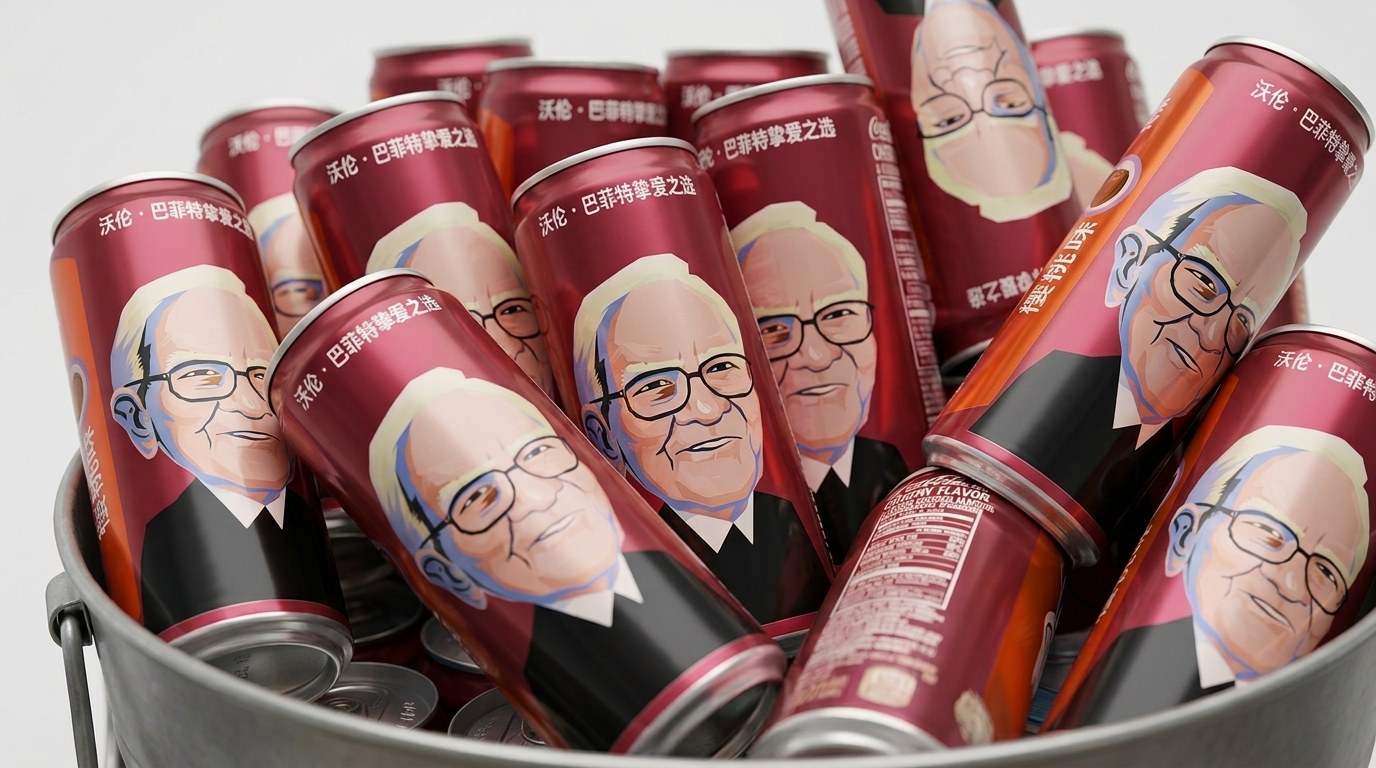
When the U.S. market closed on October 15, 2026, a stock almost nobody brings up at dinner set an all-time high: Coca-Cola. It rose a little over 2% that day — its sixth straight gain — closing around $92. The same week, chip stocks fell about 8%.
Coca-Cola has no AI story and no splashy product launches. It still sells the same sugary drink it has sold for more than a century. Warren Buffett started buying after the 1988 crash and has barely touched the position in over thirty years. During the most frenzied years of the AI boom, a company like this was practically the definition of "boring."
This time, though, Wall Street seems to have remembered it.
Wall Street Is Paying for Quality Again
Coca-Cola isn't a one-off. According to Goldman Sachs' trading desk, an index it uses to track high-quality companies rose 20% over three months, hitting a one-year high — and it climbed with remarkably little turbulence. An even more direct signal: a portfolio that buys high-quality stocks and shorts hot momentum stocks was up 55% in 2026 alone.
Why is money flowing this way? Several forces are at work at once. First, the market has started trimming its earnings expectations for the year ahead — not just for non-AI companies, but for AI-related ones too. When people realize growth won't be as fast as they hoped, they go looking for companies that make money steadily in good times and bad. Second, the market now expects interest rates to stay relatively high. When rates are high, companies with cash on hand and little debt hold up better; growth stocks that expanded on borrowed money and were bid up to lofty prices feel the squeeze.
There's a more intriguing pattern, too. Goldman's data shows quality stocks increasingly moving in the opposite direction to AI and momentum stocks. The "boring" companies investors ignored for years are now acting as the market's shock absorbers. And this is happening just as money chasing hot stocks has piled in tightly — by Goldman's measure, momentum positioning is more crowded than it has been roughly 80% of the time over the past five years. The more crowded the trade, the more likely the exit jams if everyone tries to leave at once.
Goldman's research also points to a recurring pattern: whenever the market starts cutting its earnings forecasts, quality stocks tend to be the first to pull ahead.
So what exactly does "quality" mean?
What Does the Quality Factor Look For?
Put simply, the quality factor is a health check-up for a company. Definitions vary from study to study, but the broad strokes are similar. Index provider MSCI, for example, looks at three things when selecting high-quality stocks:
First, can it make money — how much does the company earn on every dollar shareholders put in (return on equity)? Second, how much debt is it carrying — are its profits built on its own strength, or propped up by borrowed money (debt-to-equity)? Third, are the earnings steady — do profits show up year after year, or swing up and down with the weather (earnings variability)?
Here's an example. One company is growing revenue fast, but has to spend heavily every year just to keep growing, and its debt keeps piling up — impressive on the surface, not necessarily healthy underneath. Another company grows less dramatically but makes money reliably year after year, keeps cash on hand and carries little debt. The quality factor votes for the second one.

For anyone planning to hold for years, these traits matter even more. The longer you hold, the more a company's ability to keep earning decides what you end up with.
But Even Boring Quality Can Get Too Expensive
Still, the story isn't that simple. Even a textbook-quality company like Coca-Cola can't escape one question: price.
According to figures compiled by Barron's in July 2026, Coca-Cola's forward P/E was about 27 — actually higher than the roughly 22 for AI giants like Nvidia, Microsoft and Amazon. In other words, when everyone rushes to buy "safety," safety itself gets expensive.
When everyone rushes to buy "safety," safety itself gets expensive.
Quality and price are two separate questions. And what happens when a hot story fades? The market has already acted that out several times in recent memory.
A Company Doing Well and You Making Money Are Two Different Things
If a company's revenue doubles, does its stock double too? Not necessarily. A stock price reflects not only what a company earns today but everything the market expects from it in the future.
When everyone believes a company is about to transform its industry, they'll pay a very high price to get in. Even if the company really does grow afterward, the stock can still fall as long as that growth falls short of what people imagined. In other words, between a company doing well and its shareholders making money sits one more thing: the price you paid.
The three examples below were all once among the hottest names in the market. Look closely, though, and they fell for different reasons.
Zoom: Nothing Wrong With the Company — the Problem Was the Price
In April 2019, Zoom went public at $36 a share. Less than a year later, the pandemic locked the world indoors. Work, school, doctor's appointments, even weddings moved onto screens, and Zoom became a verb almost overnight. In October 2020 the stock closed at $568 — more than fifteen times its IPO price.
If you bought then, here's how the story went: Zoom didn't go under, and its business didn't disappear. By the quality factor's yardstick, it actually performed well. In the fiscal year ended January 2025, revenue was about $4.67 billion — higher than in the most frenzied pandemic year — and operating income grew from a little over $200 million two years earlier to more than $800 million. Yet by June 2026 the stock was around $83, roughly 85% below its peak.
The problem was that the 2020 price had baked in too many years of rapid growth all at once. The market imagined remote work would stay at pandemic intensity forever. Once life returned to normal and Zoom's growth slowed from several-fold a year to single digits, the stock had nowhere to go but down, settling at a level closer to reality.
Zoom's lesson: a surge in demand doesn't mean growth will last at that pace. When the market mistakes a short-term burst for a long-term trend, the most optimistic moment is usually also the most expensive one.
PayPal: A Bigger Business, a Stock Down 80%
PayPal's story is even more unsettling. Online payments aren't some fantasy theme; they're a real need people use every day. In July 2021, PayPal hit a record of about $305 a share, as the market bet digital payments were just getting started.
What happened next? From the second quarter of 2021 to the second quarter of 2026, PayPal's revenue grew about 40% and its free cash flow grew about 64%, and the company stayed solidly profitable. Yet by the end of September 2026 the stock was around $55, 83% below its high, and its P/E had fallen from lofty levels to about 10.
The business got bigger, profits grew — and the stock lost more than 80%. That's not because the company fell apart. It's because the old price was stuffed with too much imagined future. As competition heated up and growth slowed, those imagined gains were stripped out, and the price had to be recalculated.
Peloton: A Popular Product, a Business That Couldn't Hold Up
Peloton is a different case. It bundled exercise bikes, online classes and subscriptions together, and when gyms closed during the pandemic, its products sold out. By the end of 2020 the stock had climbed past $160.
This time, though, the problem wasn't only the price — it was the company itself. As the pandemic faded, demand dropped sharply, and the capacity and inventory built up to meet the surge turned into a heavy burden. In the fiscal year ended June 2022, Peloton lost $2.8 billion. Revenue shrank from a peak of $4.02 billion in fiscal 2021 to $2.49 billion in fiscal 2025, down nearly 40%. The stock eventually fell about 96% from its high.
Whether a product is good and whether customers love it is one question; whether the company can turn that love into a durable, profitable business is another. Peloton is exactly the kind of company the quality factor tries to screen out in advance: fast growth, unsteady profits, and once demand turned, every weakness surfaced.
The Price You Pay Decides What a Good Company Can Give You
Put the three examples side by side and the picture is clear. Zoom and PayPal were good companies bought at too high a price; Peloton was a hot product sitting on a business that wasn't sturdy enough. The first two are price problems, the last a quality problem — but either way, buying at the peak of the excitement hurt just the same.
So the quality factor can pull your attention back to the company itself, but it can't, on its own, tell you whether today's price makes sense. A healthy company with improving profits, bought at a reasonable price, usually offers a better long-term balance of risk and reward. The same company bought at the height of a frenzy may leave you waiting a long time just to get your money back, even if the business keeps doing well. For more on judging whether a stock is expensive, see A $750,000 Stock — Is It Expensive?
The Quality Factor Isn't a Prophecy — It's a Screen
The quality factor can't predict which company will rise next year, and it doesn't guarantee that the stocks it picks will never fall. Industries change, competitors emerge, and even steady profits can be derailed by one bad decision.
Its real value is giving investors a more disciplined way to check: don't get swept up only by hot themes, revenue growth or price momentum — ask one more question. Is this company's ability to earn steady? Are its finances healthy? Can this business keep going? In practice, pair it with valuation and other risk checks, and don't treat any single measure as the answer to everything.

Before Chasing the Next Ten-Bagger, Understand What You Already Own
The market never runs short of exciting stories. Some companies go viral on a single product, some ride an industry wave sky-high, some multiply in just a few years. But when the excitement fades, what decides whether a company stands firm is still its underlying health — and whether it can keep making money for shareholders.
The quality factor offers a different question to ask: instead of only asking how much further a stock can rise, ask whether the company can earn over the long run. Good companies are worth studying, but good stories aren't always worth chasing. And even once you've found a good company, buying in steadily over time — rather than going all in on the market's hottest day — means you don't have to bet everything on not happening to buy at the top.
Buffett may not understand every new technology, but he has always kept one distinction clear: a good story and a good investment are not the same thing. Every few years Wall Street forgets that, and every few years the market reminds it. When everyone is talking about the next big opportunity, going back to the company itself may be the most worthwhile place for a long-term investor to start.
Market data in this article is drawn from Wallstreetcn's October 15, 2026 report (citing Goldman Sachs' trading desk, Goldman Sachs Prime and The Market Ear); the Coca-Cola versus AI-leader P/E comparison cites Barron's figures from July 2026. Stock prices and financials for Zoom, PayPal and Peloton come from public market data and company reports. This article is educational and does not constitute investment advice.